|
||||
| Chestnut-backed Chickadee | ||||
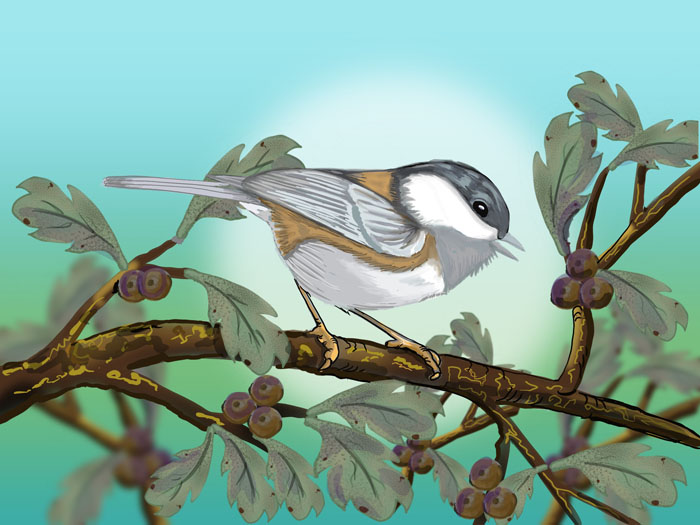
Acrylic/Ink on stretched canvas. Gallery Wrap (Unframed) 40" wide x 32" tall $600.00 20" wide x 16" tall $195.00 Custom Framing Options Available. [ BUY ] The chestnut-backed chickadee (Poecile rufescens) is a charming and distinctive bird found in the western regions of North America, primarily along the Pacific Coast. Characterized by its striking plumage, this small songbird boasts a rich chestnut-brown coloration on its back, which contrasts with its vibrant white face and underparts. The chestnut-backed chickadee is known for its lively and acrobatic behavior, often observed flitting between branches and hanging upside down while foraging for insects, seeds, and berries. Recognizable by its distinctive vocalizations, including a cheerful "chick-a-dee-dee-dee" call, these birds are social and often form small flocks. Their adaptability and resilience in various forested habitats make them a delightful and common sight for birdwatchers fortunate enough to explore the woodlands of the Pacific Northwest. |
 |
|||
| House Finch | ||||
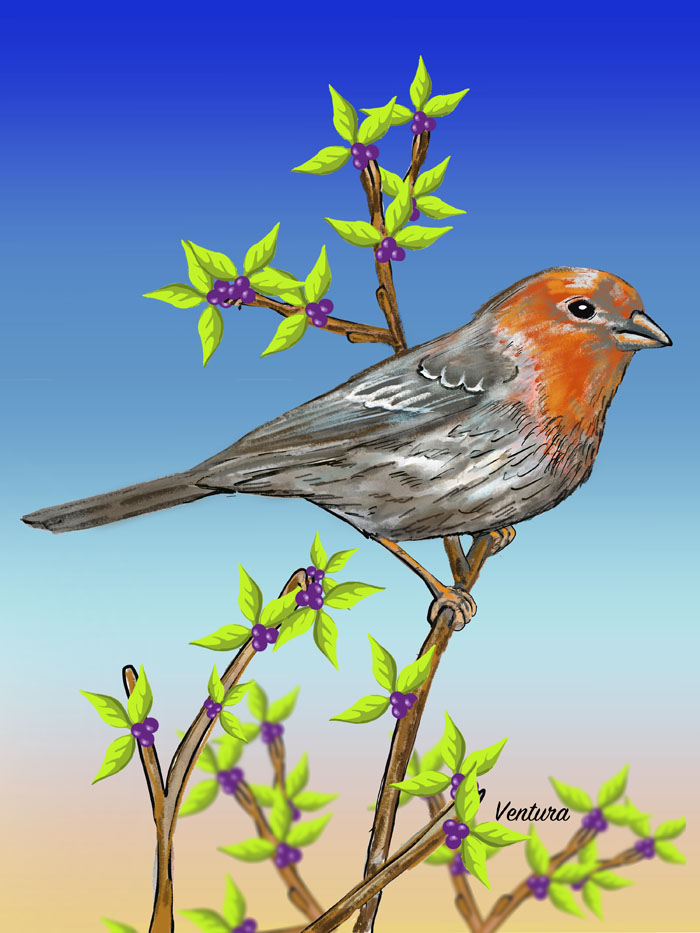
Acrylic/Ink on stretched canvas. Gallery Wrap (Unframed) 40" wide x 32" tall $600.00 20" wide x 16" tall $195.00 Custom Framing Options Available. [ BUY ] The House Finch (Haemorhous mexicanus) is a remarkable bird that has successfully adapted to urban and suburban environments across North America. As an expert in ornithology, I find this species particularly interesting due to its resilience and unique characteristics. Originally native to the western United States and Mexico, House Finches were introduced to the eastern United States in the 1940s. Since then, they have become one of the most abundant and widespread birds on the continent. Their ability to thrive in diverse habitats, from deserts to city parks, highlights their adaptability. House Finches are small, with brown streaked plumage, and both males and females exhibit variations in coloration. Males often display vibrant red plumage on their throats, heads, and chests, while females are generally streaked brown. This sexual dimorphism makes them easy to identify. These finches are highly social birds, often seen in flocks and congregating around bird feeders to feed on seeds. They are adaptable omnivores, feeding on seeds, fruits, and insects, making them versatile foragers. Intriguingly, House Finches are known for their melodious songs. Males sing to establish territory and attract mates, and their musical notes add a charming element to urban soundscapes. Understanding House Finch populations and behaviors is vital for ornithologists. This species has played a role in the study of diseases, such as mycoplasmal conjunctivitis, which affects their eyes. Ornithologists have monitored and studied this disease to better understand its effects on bird populations. In summary, the House Finch, with its adaptability, striking coloration, and sweet songs, has captured the attention of ornithologists and bird enthusiasts alike. Their successful colonization of urban areas provides an interesting study in avian adaptation and behavior, highlighting the resilience of nature in the face of human-altered landscapes.
|
 |
|||
| Acadian Flycatcher | ||||
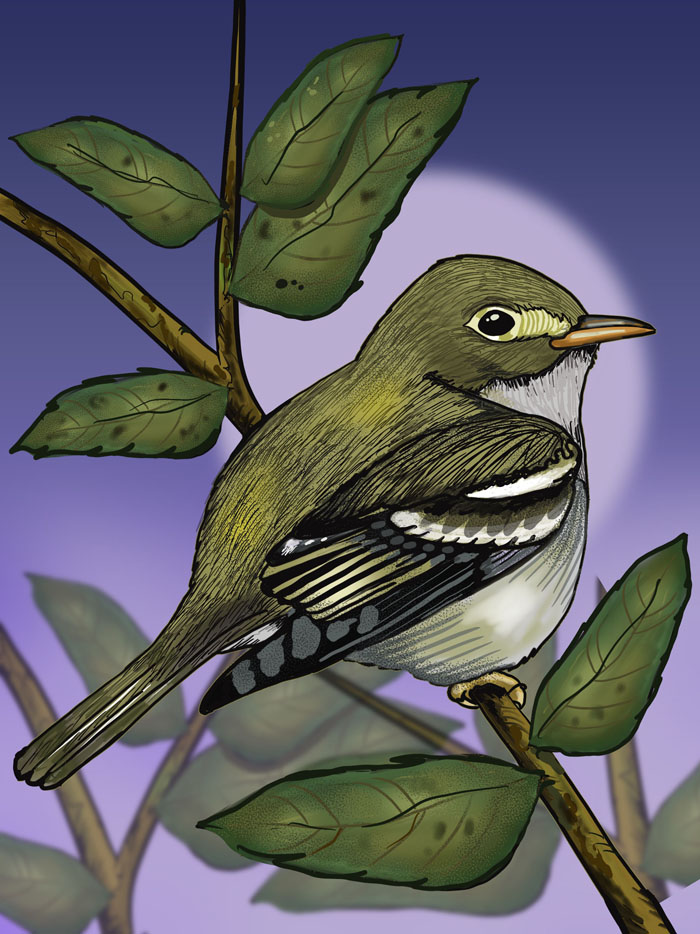
Acrylic/Ink on stretched canvas. Gallery Wrap (Unframed) 32" wide x 40" tall $600.00 16" wide x 20" tall $195.00 Custom Framing Options Available. [ BUY ] The Acadian Flycatcher (Empidonax virescens) is a small and unassuming bird that holds a special place in the world of ornithology. Found in eastern North America during the breeding season, this flycatcher has distinctive features and behaviors that make it a subject of great interest to bird enthusiasts. One of the key identifying features of the Acadian Flycatcher is its plain olive-green plumage and slightly downturned bill. They are typically small in size, measuring around 5-5.5 inches in length. Their vocalizations, characterized by their sharp "peet-sah" calls, help birders locate them in their preferred wooded habitats. These birds prefer mature deciduous forests and can often be found near streams or in damp woodlands. They are insectivorous, primarily feeding on flying insects such as flies, mosquitoes, and other small prey items. Acadian Flycatchers employ a sit-and-wait hunting strategy, perching on branches and making short sallies to catch insects on the wing. Breeding season for Acadian Flycatchers typically begins in late spring. They build cup-shaped nests in the forks of tree branches, often near water. The female lays a clutch of eggs, and both parents share incubation and chick-rearing duties. Despite their relatively inconspicuous nature, the Acadian Flycatcher is of particular interest to ornithologists because of its sensitivity to habitat loss. The preservation of mature forests and riparian zones is crucial for the survival of this species. Understanding their nesting ecology and habitat requirements is essential for effective conservation efforts. In conclusion, the Acadian Flycatcher, with its unassuming appearance and intriguing behaviors, serves as a noteworthy subject of study for ornithologists. The need to protect their habitats underscores the importance of ongoing research and conservation initiatives to ensure the well-being of this species in the face of environmental challenges.
|
 |
|||
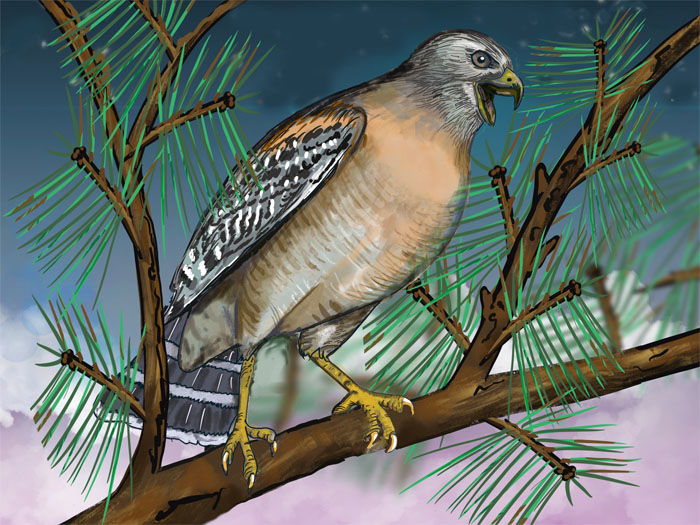
| Red-winged Falcon | ||||
Acrylic/Ink on stretched canvas. Gallery Wrap (Unframed) 30" wide x 40" tall $600.00 12" wide x 16" tall $195.00 Custom Framing Options Available. [ BUY ] The Red-winged Falcon (Falco rufus) is a fascinating and distinctive species within the world of ornithology. This small raptor is known for its striking appearance and remarkable hunting skills. Red-winged Falcons are primarily found in the grasslands and savannas of sub-Saharan Africa, where they inhabit a range of habitats, from open plains to woodlands. Their name is derived from the distinctive reddish-brown plumage on their wings, which contrasts with their predominantly white underparts. This coloration serves as excellent camouflage against the grassy landscapes they call home. These falcons are diurnal hunters and are known for their agility and speed in flight. They prey on a variety of small mammals, insects, and birds, often hunting from a perch or in-flight, making them adept aerial hunters. Their exceptional vision allows them to spot prey from high in the sky, and they can swiftly dive and capture it with their sharp talons. Breeding season for Red-winged Falcons typically occurs during the rainy season when food is abundant. They construct small, cup-shaped nests in tree cavities or on cliffs and lay a clutch of eggs. Both parents share the responsibility of incubating the eggs and providing food for the chicks. Despite their intriguing behavior and striking appearance, Red-winged Falcons face some conservation challenges due to habitat loss and the potential impact of climate change on their ecosystems. Ornithologists and conservationists continue to study and monitor these birds to better understand their needs and protect their populations. In conclusion, the Red-winged Falcon is a captivating species in the field of ornithology, known for its remarkable hunting abilities, distinctive appearance, and intriguing behaviors. Studying and conserving these birds is essential to ensure their survival in the face of changing environmental conditions. |
 |
|||
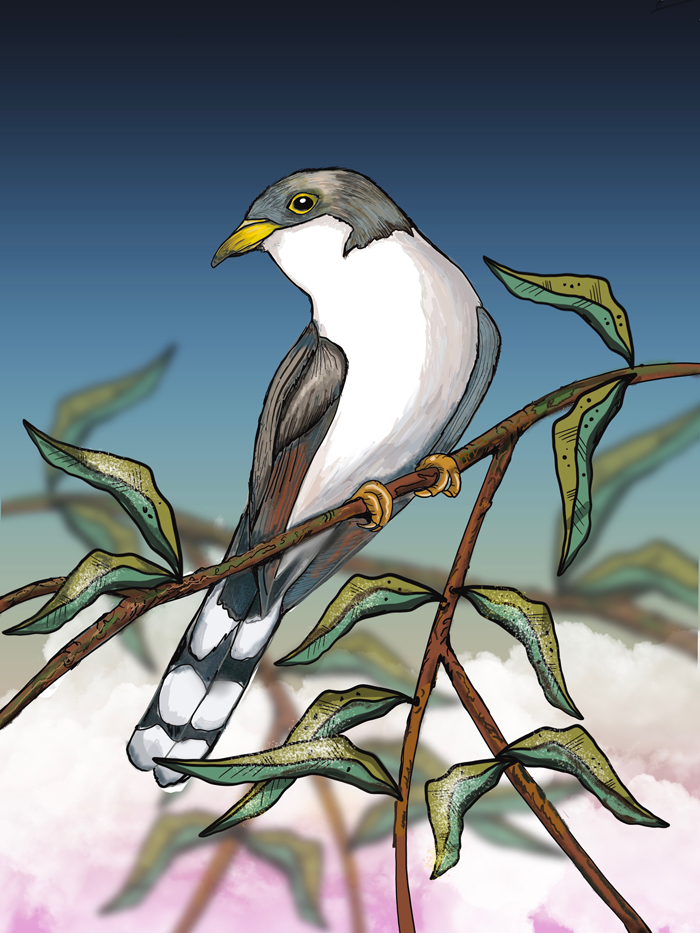
| Yellow-billed Cuckoo | ||||
Acrylic/Ink on stretched canvas. Gallery Wrap (Unframed) 30" wide x 40" tall $600.00 12" wide x 16" tall $195.00 Custom Framing Options Available. [ BUY ] The yellow-billed cuckoo (Coccyzus americanus) is a bird species native to North and Central America, known for its distinctive appearance and unique behavior. This medium-sized cuckoo is named for its striking yellow bill, which stands out against its predominantly brown plumage. The yellow-billed cuckoo has a long, slender body and a long tail with white spots on the underside, adding to its distinctiveness. These birds are often found in wooded habitats, particularly along riparian areas and dense thickets. They are known for their secretive and elusive nature, making them a challenge to spot in the wild. Yellow-billed cuckoos are summer migrants, spending their winters in Central and South America and returning to their breeding grounds in North America during the warmer months. One of their most fascinating behaviors is their diet, which primarily consists of large insects, especially caterpillars. Yellow-billed cuckoos are skilled in catching and consuming these insects, even ones with spines or hairs. Their distinctive "coo-coo-coo" call is a common sound in their habitat during the breeding season. These cuckoos play a crucial role in controlling insect populations, making them an essential part of the ecosystem. Conservation efforts are aimed at protecting their habitat to ensure the continued survival of the yellow-billed cuckoo.
|
 |
|||
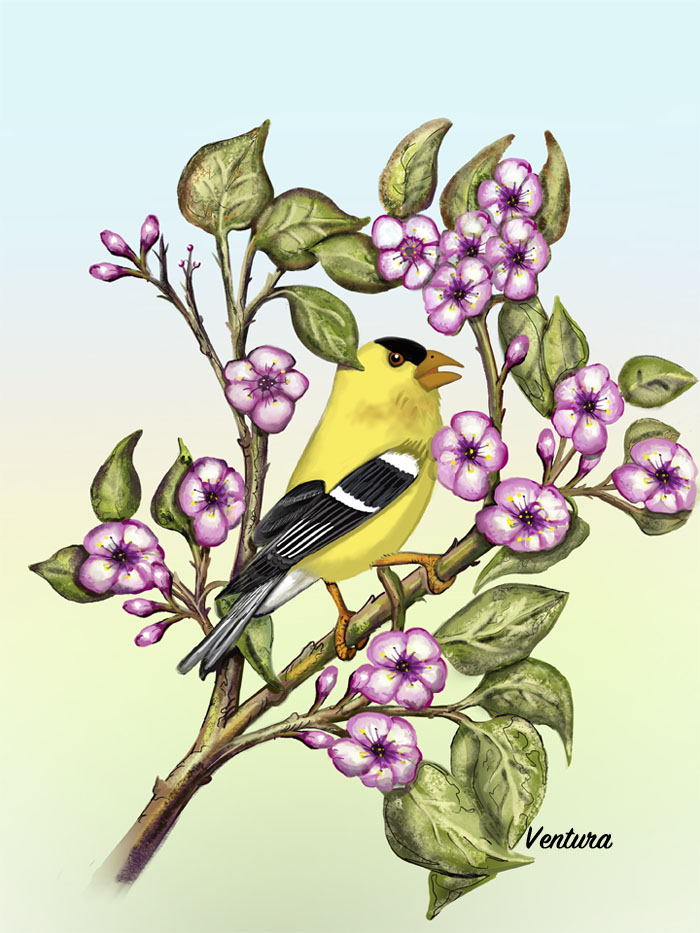
| American Goldfinch | ||||
Acrylic/Ink on stretched canvas. Gallery Wrap (Unframed) 30" wide x 40" tall $600.00 12" wide x 16" tall $195.00 Custom Framing Options Available. [ BUY ] The American Goldfinch (Spinus tristis) is a small bird that is native to North America. It is a member of the finch family and is widely recognized for its striking yellow and black plumage. Adult male American goldfinches have bright yellow bodies with black wings, tail feathers, and forehead. They also have a black patch on their forehead and wings that is easily visible in flight. Females have a more muted yellow plumage with less black coloring. During the winter months, both males and females have a duller, more olive-colored plumage. American goldfinches are known for their acrobatic flight and their cheerful, bouncing flight pattern. They are seed eaters and primarily feed on thistle, sunflower, and other small seeds. They are often found in fields, meadows, and gardens, and are known to visit bird feeders. These birds are also notable for their breeding habits. Unlike many other birds that breed in the spring and summer, American goldfinches breed in late summer and early fall. Females build small, cup-shaped nests in trees and shrubs, and both parents take turns incubating the eggs and feeding the chicks. Overall, American goldfinches are beloved by many birdwatchers for their colorful plumage, playful behavior, and cheerful songs.
|
 |
|||
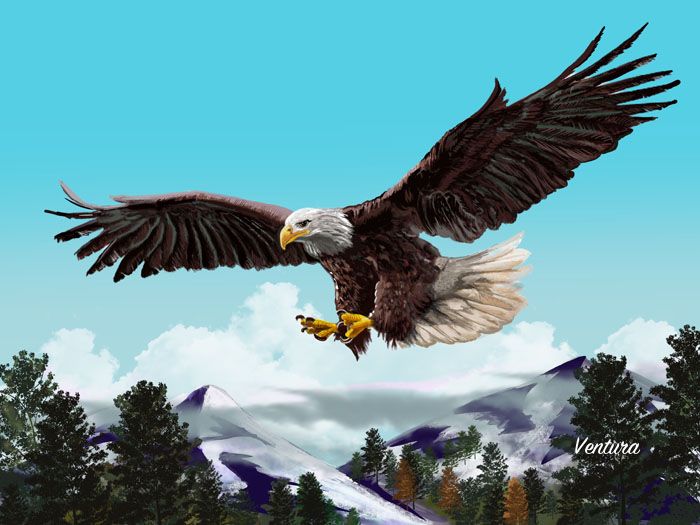
| Majestic American Eagle | ||||
Acrylic/Ink on stretched canvas. Gallery Wrap (Unframed) 40" wide x 30" tall $600.00 16" wide x 12" tall $195.00 Custom Framing Options Available. [ BUY ] The eagle is a majestic bird of prey that is often associated with strength, power, and freedom. With its sharp talons, powerful wings, and keen eyesight, the eagle is well-equipped to hunt and survive in its natural habitat. Eagles can be found all over the world, from the bald eagle in North America to the African fish eagle in sub-Saharan Africa. Many cultures throughout history have admired and revered the eagle, and it has become a symbol of national pride for many countries. Overall, the eagle is a remarkable creature that inspires awe and admiration in all who observe it. |
 |
|||
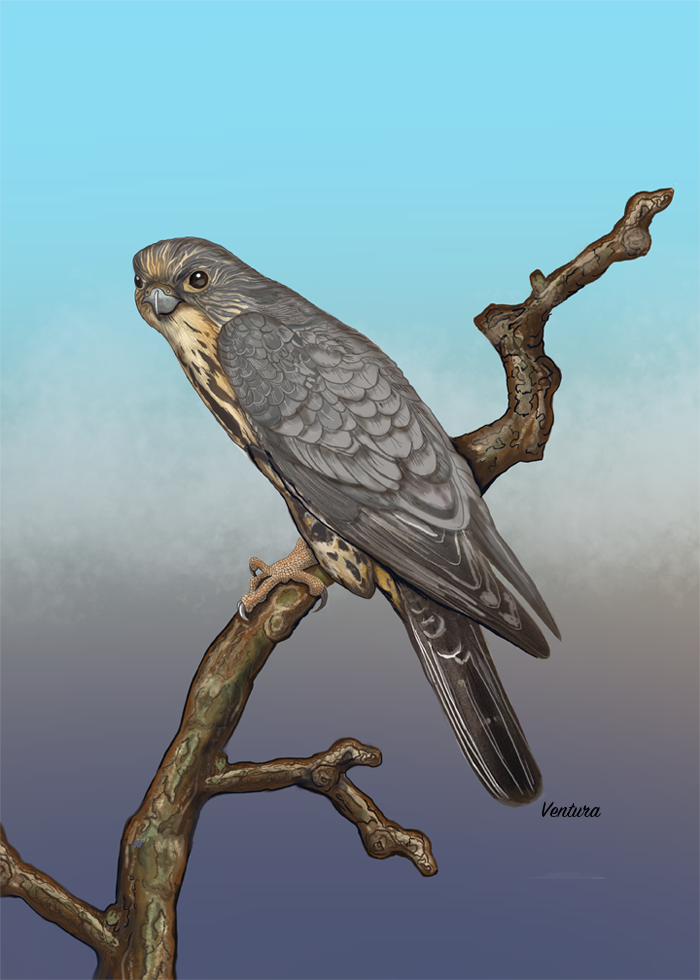
| Silent Perch | ||||
Acrylic/Ink on stretched canvas. 30" wide x 40" tall $600.00 Gallery Wrap (Unframed) 16" wide x 20" tall $195.00 Framed Custom Framing Options Available. [ BUY ] Falcons are birds of prey that are widely recognized for their incredible speed, agility, and hunting skills. There are over 40 species of falcons found throughout the world, with varying sizes, colors, and habitats. Falcons are known for their sharp talons, hooked beaks, and excellent vision, which make them formidable hunters. They feed on a variety of prey, including small birds, rodents, and insects. Falcons are also valued in falconry, a sport where trained birds are used to hunt prey. Due to habitat loss and hunting, some species of falcons are considered endangered, and efforts are being made to conserve and protect them. Despite the challenges they face, falcons remain a fascinating and awe-inspiring part of the natural world. |
 |
|||
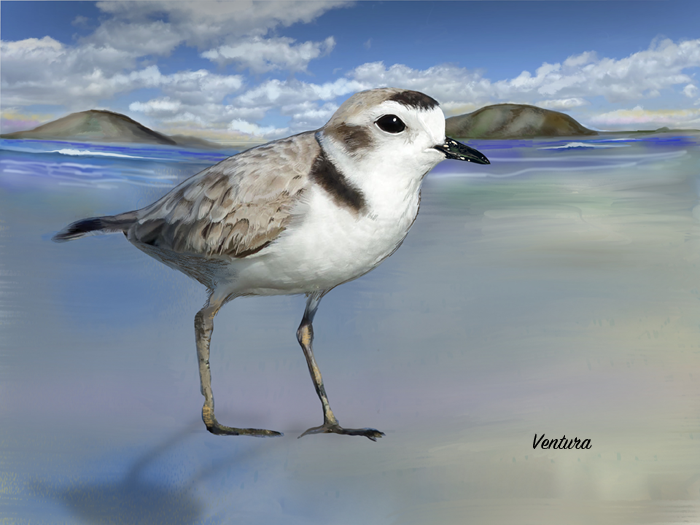
| Dunes Snowy Plover | ||||
Acrylic/Ink on stretched canvas. Gallery Wrap (Unframed) 40" wide x 30" tall $600.00 16" wide x 12" tall $195.00 Custom Framing Options Available. [ BUY ] The Pismo beach snow plover is a small bird species that inhabits the sandy beaches of the Pacific coast of North America. It is named after Pismo Beach, a popular beach destination in California where the bird is commonly seen. The snow plover is a threatened species, with only a few hundred individuals remaining in the wild due to habitat loss, predation, and disturbance from human activity. Conservation efforts are underway to protect the remaining populations of snow plovers and their habitats, including monitoring and managing beach use and educating the public about the importance of protecting these birds. |
 |
|||
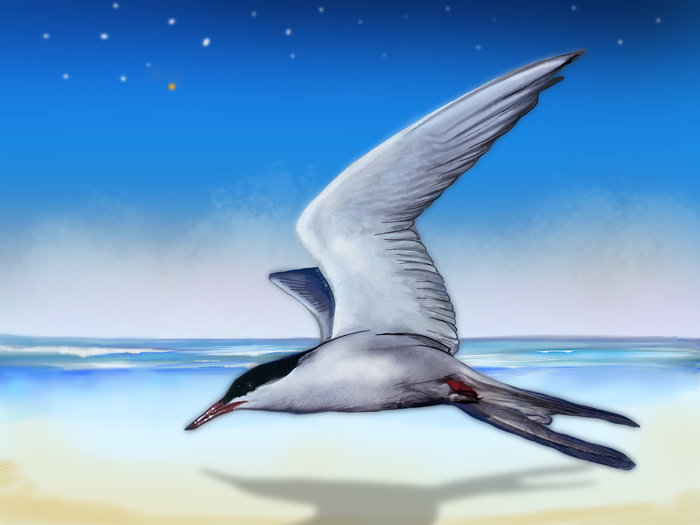
| Migrating Arctic Tern | ||||
Acrylic/Ink on stretched canvas. Gallery Wrap (Unframed) 40" wide x 30" tall $600.00 16" wide x 12" tall $195.00 Custom Framing Options Available. [ BUY ] The Arctic tern is a migratory bird that has the longest migration of any bird species in the world. They breed in the Arctic and sub-Arctic regions of North America, Europe, and Asia during the summer months, then migrate to the Antarctic for the winter. This means that they travel over 44,000 miles round-trip each year, making it the longest migration of any bird species. They are also known for their longevity, with some individuals living over 30 years. The Arctic tern feeds on small fish and invertebrates and nests on open tundra or rocky coastal areas. However, their populations are under threat due to climate change, pollution, and habitat destruction, highlighting the need for conservation efforts to protect these impressive birds. |
 |
|||
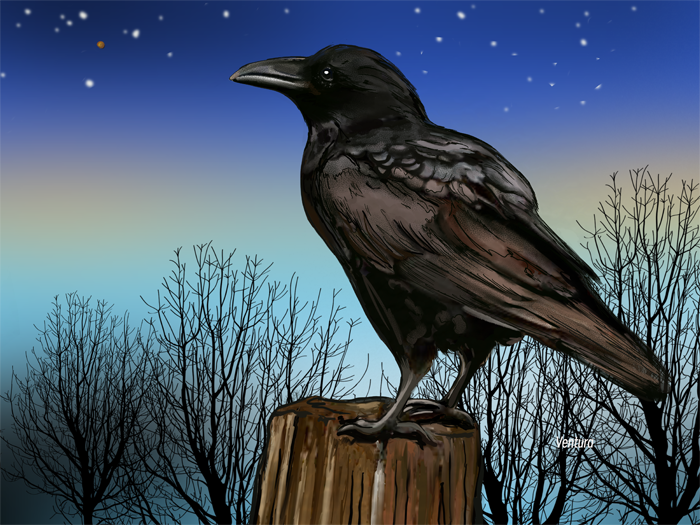
| Evening Crow | ||||
Acrylic/Ink on stretched canvas. Gallery Wrap (Unframed) 40" wide x 30" tall $600.00 16" wide x 12" tall $195.00 Custom Framing Options Available. [ BUY ] Crows are a highly intelligent and adaptable bird species that are found all over the world. They are known for their distinctive black plumage and their loud, raucous cawing calls. Crows are omnivorous and will eat almost anything, including insects, small mammals, eggs, and carrion, as well as a variety of fruits and grains. They are also known for their remarkable problem-solving skills and social behavior, often working together to solve puzzles and defend their territories. In many cultures, crows are associated with both good and bad omens and have been featured in literature and folklore for centuries. Despite their adaptability, however, crows are still vulnerable to habitat loss and pollution, highlighting the need for conservation efforts to protect these intelligent and fascinating birds. |
 |
|||
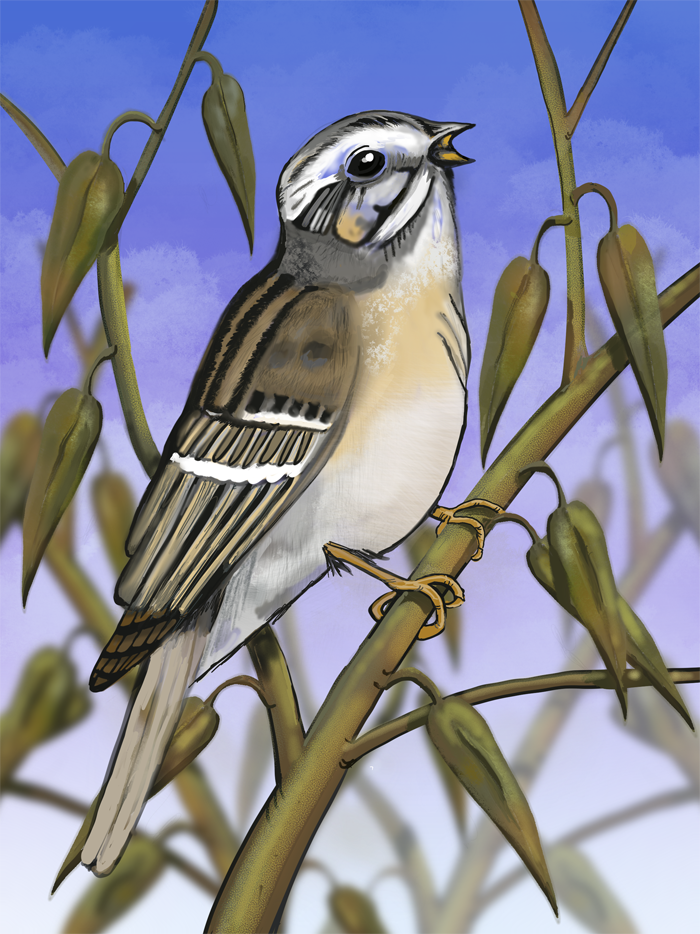
| Sparrow (Spizella pallida) | ||||
Acrylic/Ink on stretched canvas. Gallery Wrap (Unframed) 30" wide x 40" tall $600.00 12" wide x 16" tall $195.00 Custom Framing Options Available. [ BUY ] Spizella pallida, a clay-colored sparrow, is a small bird species that breeds in North America and winters in Mexico and Central America. They are named after their distinctive clay-brown coloration and are often found in grasslands, meadows, and other open habitats. Clay-colored sparrows feed on a variety of seeds, insects, and spiders and have a distinctive, melodious song that is often described as a "buzzing trill". While they are not considered endangered, their populations are declining due to habitat loss and fragmentation caused by agricultural practices and urbanization. Conservation efforts are underway to protect their breeding and wintering habitats, as well as to raise public awareness of their ecological importance. |
 |
|||
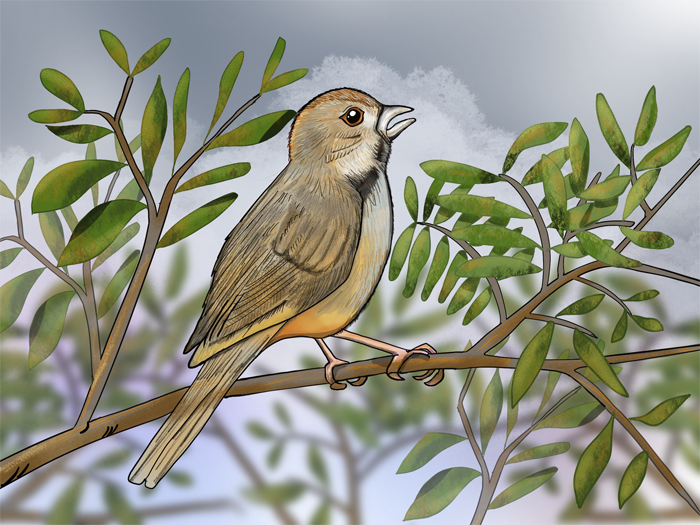
| Canyon Towhee | ||||
Acrylic/Ink on stretched canvas. Gallery Wrap (Unframed) 30" wide x 40" tall $600.00 12" wide x 16" tall $195.00 Custom Framing Options Available. [ BUY ] The Canyon Towhee, also known as the brown towhee, is a bird species native to the southwestern United States and northern Mexico. They are named after the canyons and rocky habitats where they are commonly found, and are often identified by their distinctive rust-colored plumage and long, curved beaks. Canyon towhees are omnivorous and feed on a variety of seeds, fruits, insects, and small animals. They have a distinctive, trilling song that can be heard echoing through the canyons and cliffs they inhabit. While their populations are considered stable, they are vulnerable to habitat loss and degradation caused by human activities, such as urbanization and mining. Efforts are being made to protect their habitats and raise public awareness of their ecological importance. |
 |
|||
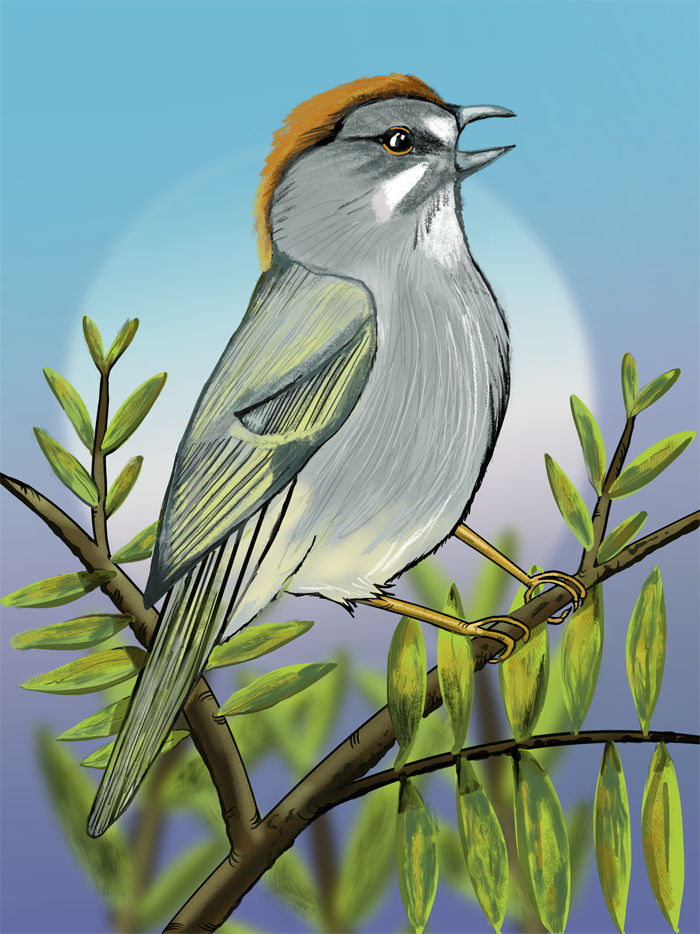
| Spotted Towhee (Pipilo maculatus) | ||||
Acrylic/Ink on stretched canvas. Gallery Wrap (Unframed) 30" wide x 40" tall $600.00 12" wide x 16" tall $195.00 Custom Framing Options Available. [ BUY ] The Spotted Towhee (Pipilo maculatus) is a striking and easily identifiable bird found in North America. This medium-sized towhee is known for its bold black plumage with white spots, creating a distinctive pattern on its wings and back. The male Spotted Towhee has a glossy black hood and a rufous (reddish-brown) side, while the female is generally brown with white spots. They are often found foraging on the ground, using their strong bills to scratch through leaf litter in search of seeds, insects, and small invertebrates. These towhees are skilled singers, with their songs consisting of a series of trills and mews. They inhabit a variety of habitats, including brushy areas, open woodlands, and chaparral, making them a common and delightful sight for birdwatchers across their range in western North America. |
 |
|||
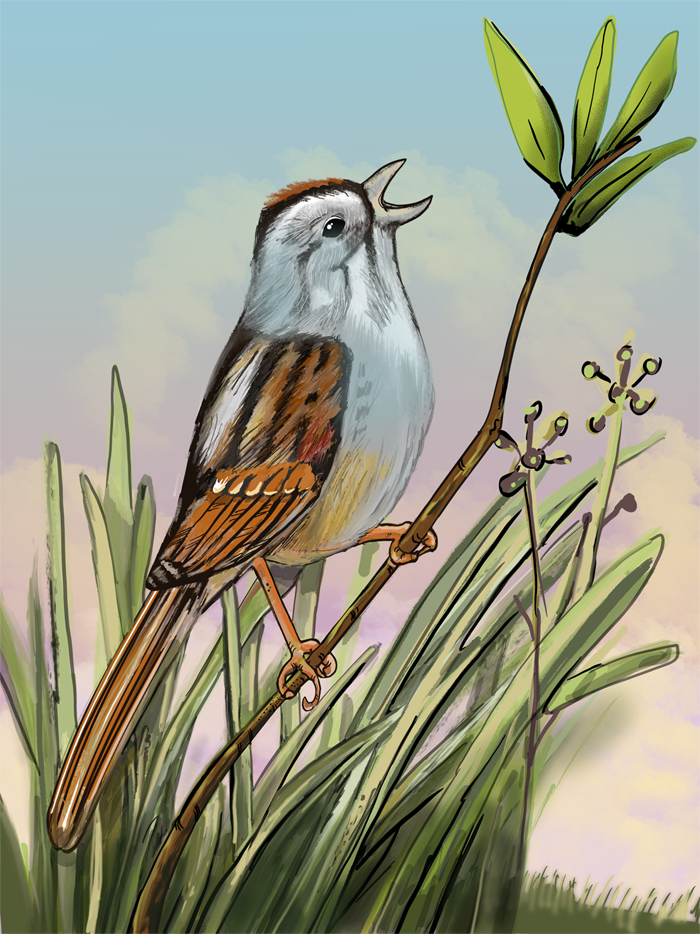
| Swamp Sparrow (Melospiza georgiana) | ||||
Acrylic/Ink on stretched canvas. Gallery Wrap (Unframed) 30" wide x 40" tall $600.00 12" wide x 16" tall $195.00 Custom Framing Options Available. [ BUY ] The Swamp Sparrow (Melospiza georgiana) is a charming bird inhabiting wetland areas across North America. Recognizable by its rich chestnut-colored wings and back, the Swamp Sparrow features a grayish face and a distinctive rusty cap that contrasts with its grayish cheeks. This medium-sized sparrow is well-adapted to its marshy habitats, where it forages for insects, seeds, and small aquatic invertebrates. With a melodic and varied song, the Swamp Sparrow adds musical notes to its wetland homes during the breeding season. While it may be more often heard than seen due to its preference for dense vegetation, patient observers are rewarded with glimpses of this delightful sparrow perched on cattails or other waterside vegetation. The Swamp Sparrow contributes to the vibrant tapestry of birdlife in wetland ecosystems, showcasing nature's diversity and resilience. |
 |
|||
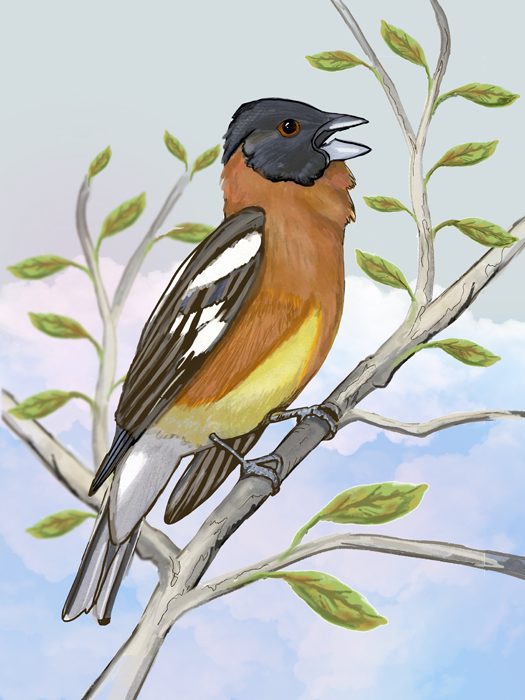
| Black-headed Grosbeak | ||||
Acrylic/Ink on stretched canvas. Gallery Wrap (Unframed) 30" wide x 40" tall $600.00 12" wide x 16" tall $195.00 Custom Framing Options Available. [ BUY ] The Black-headed Grosbeak (Pheucticus melanocephalus) is a medium-sized songbird found in North America. As the name suggests, it is characterized by its striking black head, contrasting with its vibrant orange or chestnut body. The male has a black throat, while the female displays a lighter, grayish-brown head and yellow underparts. Both sexes have thick, conical beaks adapted for cracking seeds and consuming insects.
|
 |
|||
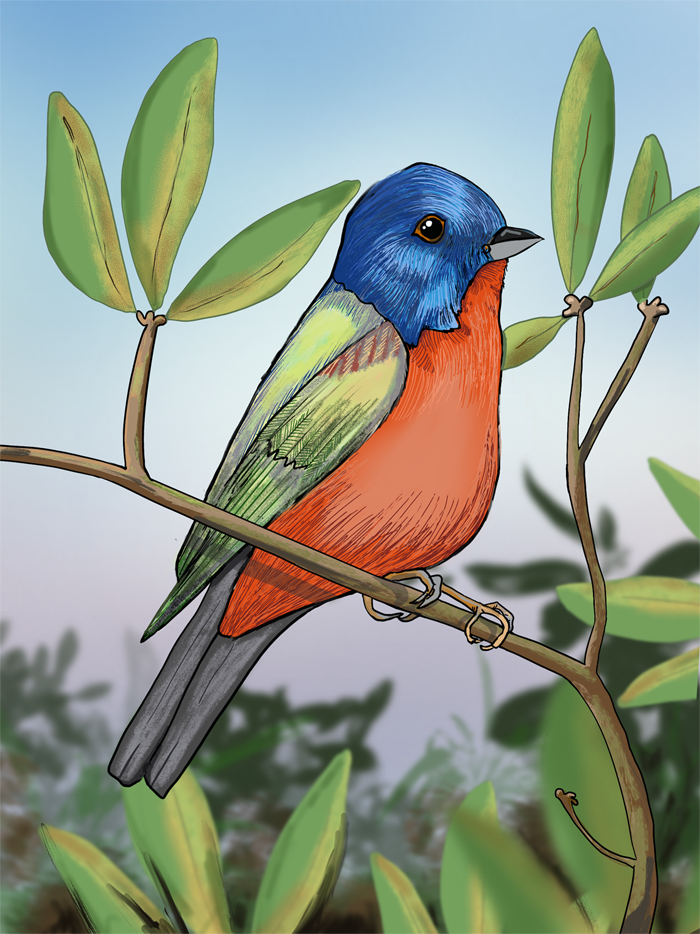
| Painted Bunting | ||||
Acrylic/Ink on stretched canvas. Gallery Wrap (Unframed) 30" wide x 40" tall $600.00 12" wide x 16" tall $195.00 Custom Framing Options Available. [ BUY ] The Painted Bunting is a small, brightly colored bird that is found in the southern United States, Mexico, and Central America. The males have a vibrant combination of blue, green, and red feathers on their head, back, and wings, while the females have a more subdued greenish-yellow coloration. These birds prefer to live in dense brushy habitats such as thickets, hedgerows, and scrublands, where they feed on a variety of seeds, fruits, and insects. Painted Buntings are known for their distinctive, melodious song that is often compared to the sound of a rolling marble. Although they are not considered endangered, Painted Buntings face threats from habitat loss due to urban development, agriculture, and deforestation. Additionally, they are often captured for the pet trade due to their colorful plumage, which has led to population declines in some areas. |
 |
|||
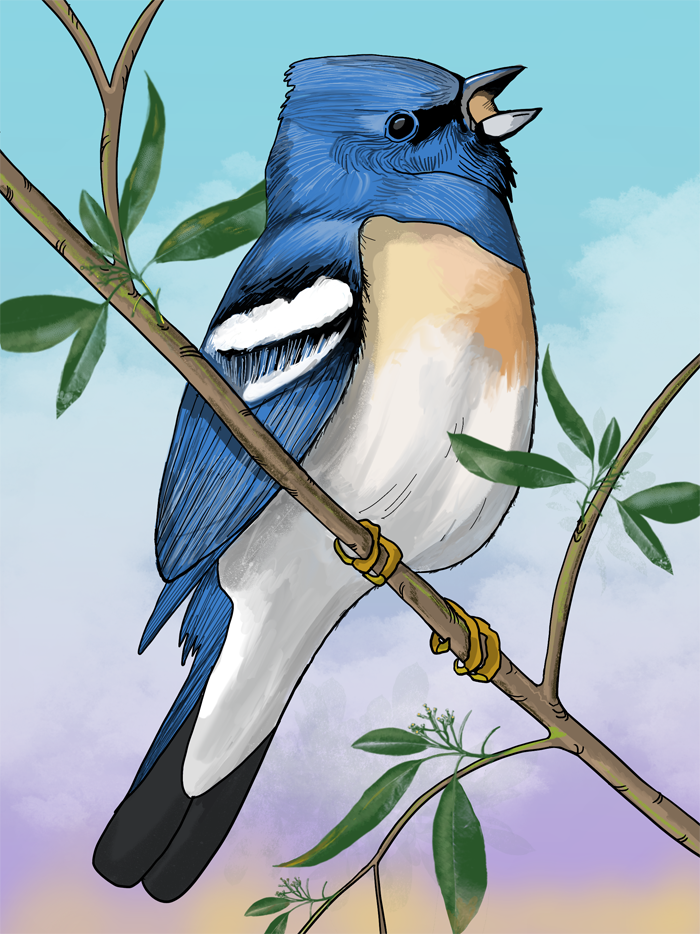
| Lazuli Bunting | ||||
Acrylic/Ink on stretched canvas. Gallery Wrap (Unframed) 30" wide x 40" tall $600.00 12" wide x 16" tall $195.00 Custom Framing Options Available. [ BUY ] The Lazuli Bunting is a small, brightly colored bird species that is found in the western United States and Mexico. The male has a striking blue head, back, and wings, with rusty brown breast and a white belly, while the female is less vibrant with brownish-grey upperparts and lighter underparts. These birds prefer to live in open woodlands, brushy areas, and fields where they feed on insects, seeds, and berries. They are known for their melodious, tinkling song that is often heard during the breeding season. The Lazuli Bunting is an active migratory bird, spending the winter months in Central America and returning to their breeding grounds in the western US in the spring. Although they are not considered endangered, these birds face threats from habitat loss due to urban development, agriculture, and deforestation, as well as predation by domestic and feral cats.
|
 |
|||
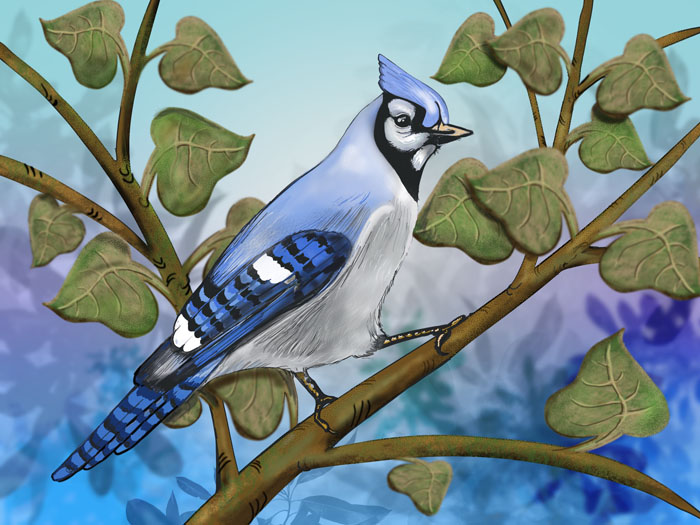
| Blue Jay | ||||
Acrylic/Ink on stretched canvas. Gallery Wrap (Unframed) 30" wide x 40" tall $600.00 20" wide x 16" tall $195.00 Custom Framing Options Available. [ BUY ] Blue Jays are large, striking birds that are found throughout most of eastern and central North America. They have bright blue feathers on their wings and tail, a blue crest on their head, and white underparts. These birds are known for their bold personalities and raucous calls, often announcing their presence with a loud "jay, jay" call. Blue Jays prefer to live in forested areas and suburban neighborhoods, where they feed on a variety of seeds, nuts, fruits, and insects. They are also known to raid bird feeders and gardens for food. Blue Jays are monogamous and form pair bonds that can last for several years. During the breeding season, they build nests in trees and shrubs, and both parents help to care for the young. Blue Jays are not considered endangered, but they face threats from habitat loss due to deforestation and urbanization, as well as predation by domestic cats and other animals. |
 |
|||
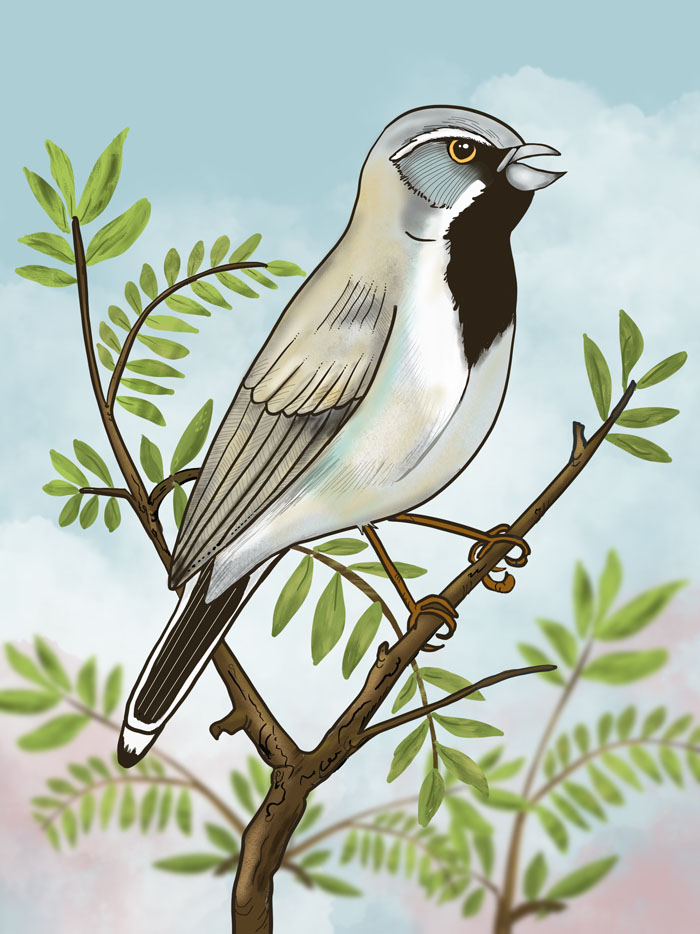
| Black Throated Sparrow (Amphispiza bilineata) | ||||
Acrylic/Ink on stretched canvas. Gallery Wrap (Unframed) 30" wide x 40" tall $600.00 12" wide x 16" tall $195.00 Custom Framing Options Available. Black-throated Sparrow, also technically known as Amphispiza bilineata, is a small bird species that is found in arid regions of the southwestern United States and Mexico. They have a distinctive black bib on their throat, greyish-brown upperparts, and white underparts. These birds are adapted to life in desert habitats, where they feed on a variety of seeds, insects, and small invertebrates. Black-throated Sparrows are also known for their distinctive, melodic song, which can be heard throughout the year. During the breeding season, they build nests on the ground, using plant materials and sometimes incorporating spider webs to bind the structure. Black-throated Sparrows are not considered endangered, but they face threats from habitat loss due to human development and wildfires, as well as predation by domestic cats and other predators.
|
 |
|||
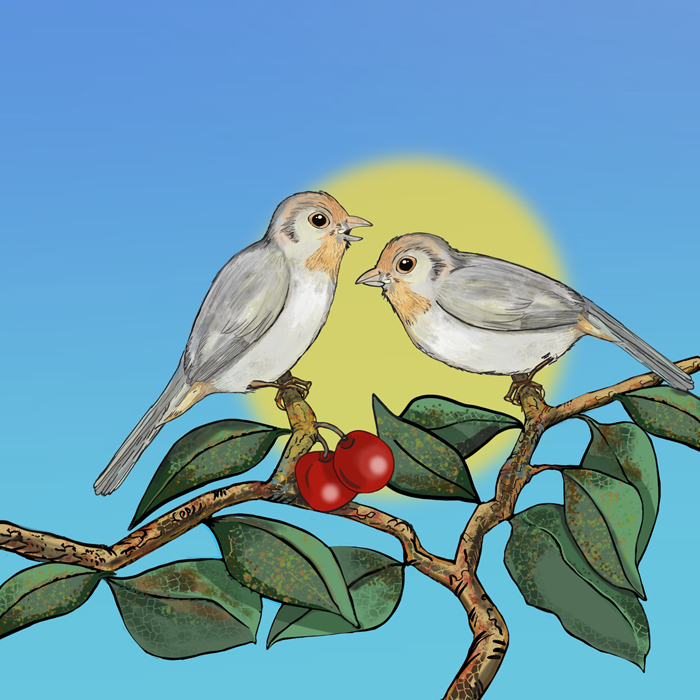
| California Towhee | ||||
Acrylic on stretched canvas. Black wooden rescessed frame. 14" wide x 14" tall $115.00 Gallery Wrap (Unframed) 14" wide x 14" tall $72.00 [ BUY ] The California Towhee is a common bird species that is found throughout western North America, from southern Oregon to Baja California. They have a plain brownish-grey plumage with a rusty-red cap and undertail coverts. These birds prefer to live in shrubby areas, woodland, and gardens, where they feed on seeds, insects, and small invertebrates. They are also known for their distinctive "chink" call, which is often heard throughout the day. During the breeding season, they build nests on the ground, using grasses and other plant materials. California Towhees are not considered endangered, but they face threats from habitat loss due to urban development, agriculture, and wildfires. Despite their plain appearance, California Towhees are beloved by many birdwatchers and backyard bird enthusiasts for their charming personalities and engaging behavior.
|
 |
|||
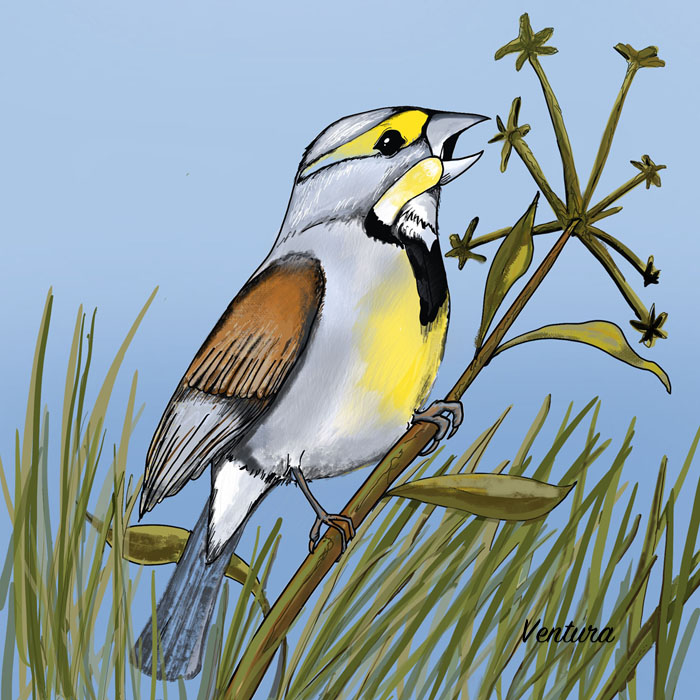
| Dickcissel | ||||
Acrylic on stretched canvas. Black wooden rescessed frame. 14" wide x 14" tall $115.00 Gallery Wrap (Unframed) 14" wide x 14" tall $72.00 [ BUY ]
|
 |
|||
| Yellow-headed Blackbird | ||||
Acrylic on stretched canvas. Black wooden rescessed frame. 16" wide x 20" tall $150.00 Gallery Wrap (Unframed) 16" wide x 20" tall $95.00 [ BUY ] The Yellow-headed Blackbird is a striking bird species that is found in wetland habitats of western North America. The male has a distinctive bright yellow head and breast, with black wings and body, while the female is less colorful with a streaky brownish-black plumage. These birds feed primarily on insects, seeds, and small invertebrates, and are known for their distinctive "conk-a-ree" call that can be heard throughout the breeding season. They build nests in cattails and other tall vegetation near water, and both parents help to care for the young. Yellow-headed Blackbirds are migratory birds, spending the winter months in southern California, Arizona, and Mexico. While they are not considered endangered, they face threats from habitat loss due to wetland drainage and degradation, as well as predation by introduced species such as the Brown-headed Cowbird. Conservation efforts are underway to protect and restore wetland habitats for the benefit of Yellow-headed Blackbirds and other wetland birds.
|
 |
|||
| Scarlet Tanager | ||||
Acrylic on stretched canvas. Black wooden rescessed frame. 16" wide x 20" tall $150.00 Gallery Wrap (Unframed) 16" wide x 20" tall $95.00 [ BUY ] The Scarlet Tanager is a striking bird species that is found in deciduous forests of eastern North America. The male has a bright red plumage with black wings and tail, while the female is less colorful with a yellow-green plumage. These birds feed primarily on insects, and are known for their distinctive "chick-burr" call that can be heard throughout the breeding season. They build nests in trees, and both parents help to care for the young. Scarlet Tanagers are migratory birds, spending the winter months in South America and returning to their breeding grounds in the spring. While they are not considered endangered, they face threats from habitat loss due to deforestation and fragmentation, as well as collisions with buildings and other structures during migration. Conservation efforts are underway to protect and restore deciduous forests for the benefit of Scarlet Tanagers and other forest birds |
 |
|||
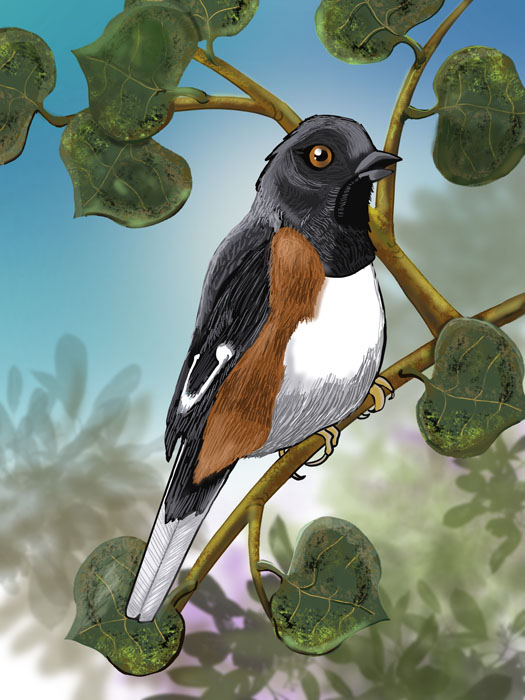
| Eastern Towhee | ||||
Acrylic on stretched canvas. Black wooden rescessed frame. 16" wide x 20" tall $150.00 Gallery Wrap (Unframed) 16" wide x 20" tall $95.00 [ BUY ] The Eastern Towhee is a bird species that is found in a variety of habitats across eastern North America, from southern Canada to Florida. They have a distinctive black hood and upperparts, rufous sides, and white underparts. These birds feed primarily on seeds, insects, and small invertebrates, and are known for their distinctive "drink-your-tea" call that can be heard throughout the year. They build nests on the ground, using grasses and other plant materials, and both parents help to care for the young. Eastern Towhees are not considered endangered, but they face threats from habitat loss due to urbanization and agriculture, as well as predation by domestic cats and other predators. Despite these challenges, Eastern Towhees are beloved by many birdwatchers and backyard bird enthusiasts for their striking appearance and engaging behavior.
|
 |
|||
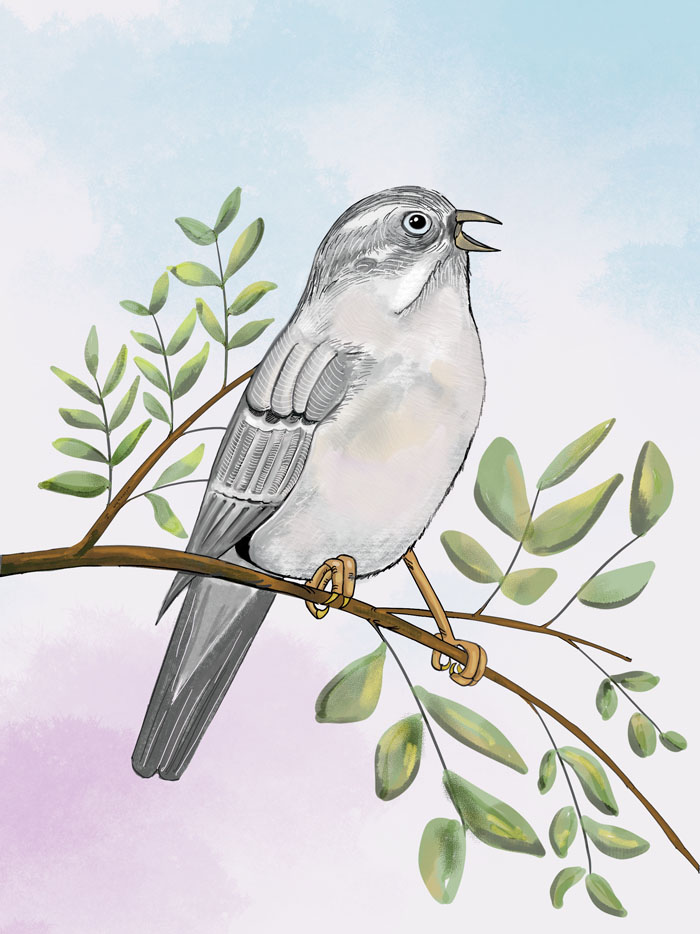
| Brewer's Sparrow | ||||
Acrylic on stretched canvas. Black wooden rescessed frame. 16" wide x 20" tall $150.00 Gallery Wrap (Unframed) 16" wide x 20" tall $95.00 [ BUY ] The Brewer's Sparrow is a small bird species that is found in western North America, from British Columbia to northern Mexico. They have a plain brownish-gray plumage with a distinctive pale eye-ring and buffy wingbars. These birds prefer to live in sagebrush steppe habitats, where they feed primarily on insects and seeds. They are known for their distinctive trilling song, which is often heard during the breeding season. Brewer's Sparrows build nests on or near the ground, using grasses and other plant materials, and both parents help to care for the young. Brewer's Sparrows are not considered endangered, but they face threats from habitat loss due to urbanization, energy development, and agriculture. Conservation efforts are underway to protect and restore sagebrush habitats for the benefit of Brewer's Sparrows and other sagebrush-dependent species.
|
 |
|||
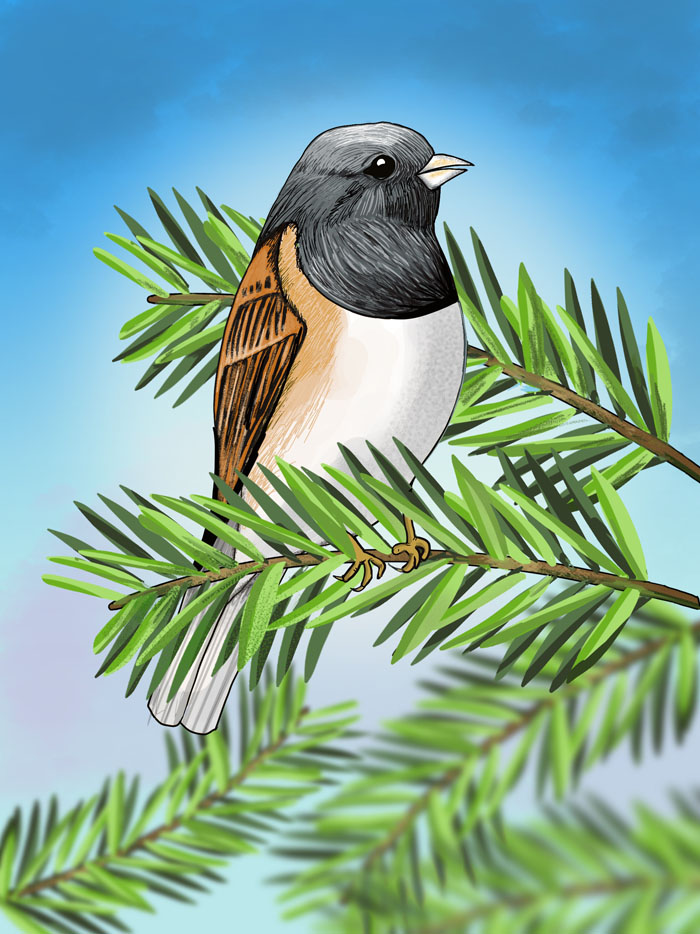
| Dark-eyed Junco | ||||
Acrylic on stretched canvas. Black wooden rescessed frame. 16" wide x 20" tall $150.00 Gallery Wrap (Unframed) 16" wide x 20" tall $95.00 [ BUY ] The Dark-eyed Junco is a small bird species that is found throughout much of North America, from Alaska to Mexico. They have a distinctive gray or brownish-gray plumage with white underparts, and in some subspecies, a dark hood or head markings. These birds feed primarily on seeds, insects, and other small invertebrates, and are known for their distinctive "tick-tick-tick" call. Dark-eyed Juncos breed in the northern parts of their range, and migrate south to spend the winter in lower elevations. They build nests on or near the ground, using grasses and other plant materials, and both parents help to care for the young. Dark-eyed Juncos are not considered endangered, but they face threats from habitat loss due to urbanization, agriculture, and energy development. Despite these challenges, Dark-eyed Juncos are beloved by many birdwatchers and backyard bird enthusiasts for their charming behavior and adaptability.
|
 |
|||
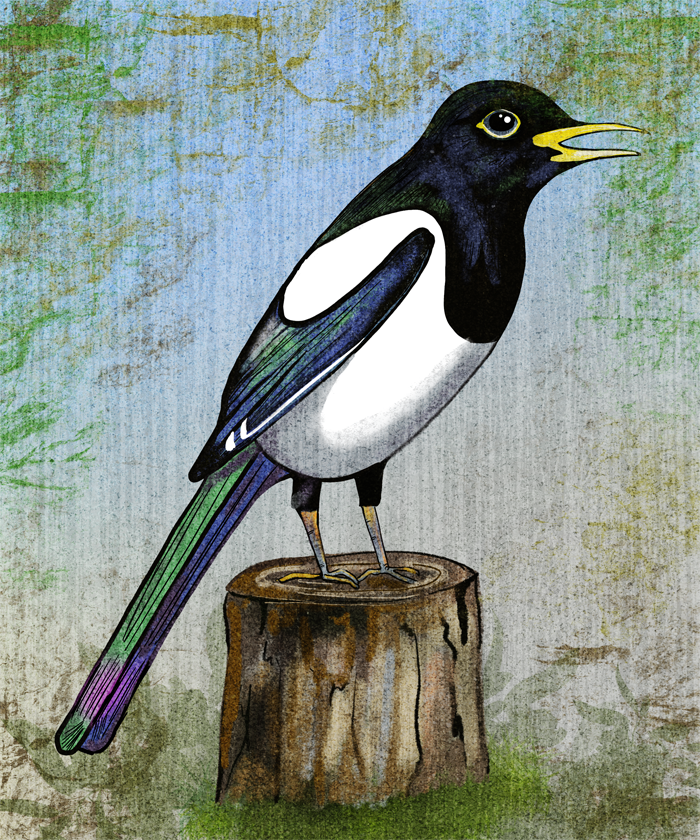
| Magpie | ||||
Acrylic on stretched canvas. Black wooden rescessed frame. 16" wide x 20" tall $150.00 Gallery Wrap (Unframed) 16" wide x 20" tall $95.00 [ BUY ] The Magpie is a bird species that is found in much of Europe, Asia, and western North America. They have a distinctive black and white plumage, with a long tail and a prominent crest on their head. Magpies feed on a variety of foods, including insects, small mammals, fruits, and seeds, and are known for their intelligence and social behavior. They are often seen in small groups or pairs, and are known to engage in cooperative breeding and territorial defense. Magpies build nests in trees or shrubs, using twigs and other plant materials, and both parents help to care for the young. While Magpies are not considered endangered, they are sometimes viewed as pests due to their predation on songbird nests and agricultural crops. Despite this reputation, Magpies are appreciated by many birdwatchers for their striking appearance and engaging behavior.
|
 |
|||
| Western Tanager | ||||
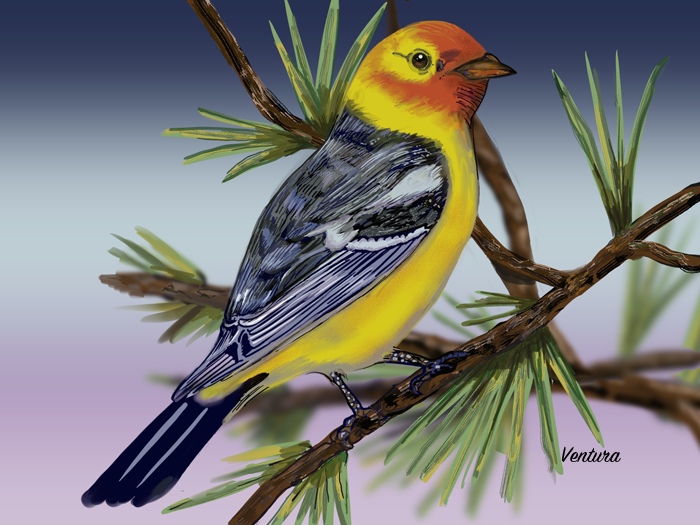
Acrylic on stretched canvas. Black wooden rescessed frame. 16" wide x 20" tall $150.00 Gallery Wrap (Unframed) 16" wide x 20" tall $95.00 [ BUY ] The Western Tanager: A Splash of Color in the Western Skies In the vast and diverse world of avian wonders, the Western Tanager (Piranga ludoviciana) stands out as a true gem of the western United States and parts of Canada. With its vibrant plumage, striking melodies, and intriguing behaviors, this species has captivated the hearts of birdwatchers for generations. Join me on a journey into the world of the Western Tanager, a bird that adds a brilliant splash of color to the skies of the American West. The Western Tanager is renowned for its dazzling appearance, making it a true spectacle in the avian realm. Males sport a brilliant flame-red head, a yellow body, and contrasting black wings. The deep scarlet hue of their head feathers is a striking contrast to their bright yellow plumage, creating a vibrant and unforgettable visual display. Female Western Tanagers, on the other hand, have a more subdued appearance, with olive-green backs and yellowish undersides. This species is primarily a western North American resident, with its breeding range extending from Alaska to Mexico. During the summer months, you can find Western Tanagers in a variety of habitats, including coniferous and mixed forests, mountainous regions, and even open woodlands. These birds prefer to nest high in the canopy, often choosing conifer trees for their secluded nesting sites. As autumn arrives, Western Tanagers begin their remarkable migration southward, traveling to their wintering grounds in Mexico and Central America. Their migration path takes them through a wide range of habitats, including deciduous and tropical forests, which makes them a delight for birdwatchers who can spot them on their journey. Western Tanagers are known for their insect-heavy diet during the breeding season, feeding on a variety of insects, spiders, and berries. Their unique feeding habits include "flycatching," where they dart through the air to catch insects in mid-flight. In preparation for migration, their diet shifts to a more fruit-based menu, helping them accumulate energy for the long journey ahead. The breeding season of Western Tanagers is a special time for birdwatchers, as these birds are known for their intricate courtship rituals. Males sing enchanting melodies to attract females, and the pair often perform aerial displays to solidify their bond. After this courtship, the female constructs a cup-shaped nest hidden in the tree canopy, usually made of grasses, bark, and twigs. They typically lay 3-5 pale blue or greenish-blue eggs, and both parents share the responsibility of incubation and chick-rearing. Western Tanagers are generally considered a species of least concern in terms of conservation, but their populations may be vulnerable to habitat loss and the impacts of climate change. Protecting their forested breeding and wintering habitats remains crucial to ensuring their continued presence in our skies. The Western Tanager, with its stunning appearance and unique behaviors, is undoubtedly a cherished sight for birdwatchers in the western regions of North America. As they migrate from the towering conifers to the tropical forests, they bring a touch of brilliance to every corner of their range. Next time you find yourself in the stunning landscapes of the American West, keep your eyes peeled for this magnificent bird, and you might just be treated to a flash of vibrant red and yellow in the wild. |
|
|||
| Penguins | ||||
Acrylic on stretched canvas. Black wooden rescessed frame. 16" wide x 20" tall $150.00 Gallery Wrap (Unframed) 16" wide x 20" tall $95.00 [ BUY ] Penguins, with their tuxedo-like plumage and waddling gait, embody the spirit of resilience in the icy expanse of the Antarctic and beyond. These captivating birds navigate their frozen world with a blend of elegance and determination, their sleek bodies streamlined for swift underwater propulsion. Their stark black and white feathers form a striking contrast against the snow-covered landscapes they call home, providing camouflage from predators above and below. With webbed feet adapted for both swimming and traversing icy terrain, penguins gracefully glide through the frigid waters in pursuit of their prey, showcasing their remarkable agility and speed beneath the surface. Despite the harsh conditions of their habitat, penguins exhibit remarkable social bonds, forming tight-knit colonies where they huddle together for warmth and support, their communal instincts ensuring the survival of each member of the group. From the playful antics of their courtship rituals to the tender care they show towards their fluffy chicks, penguins captivate the imagination with their resilience, adaptability, and unwavering spirit in the face of adversity. |
 |